A couple of years ago, the technology department took 30 food students to Borough Market on the southbank in London. The market is vibrant, bustling, exotic and varied and you can get anything from a simple onion to some blue brain cheese – apparently the mouldiest cheese in the UK. The students loved tasting the different paellas, smelling truffles and being out and about in a trendy area of London. I take my children there at least once in the holidays (back in the days when we were allowed out) and they love fish finger sandwiches and roast potatoes from Roast takeaway, eaten whilst sat on the curb on the outside edge of the market.
 On this school trip, we attended a workshop at Bread Ahead bakery. They are absolutely famous for their doughnuts and the queue is always huge outside the bakery, but soooooooooooooooo worth it. Light, fluffy dough filled with homemade raspberry jam or salted caramel and then rolled in sugar; they are a delight. The students were there to make soda bread and this was done in a huge workshop space at the top of the commercial bakery. Soda bread requires no yeast, no kneading and its magic lies in the simple chemical reaction between acid and alkaline.
It has a very different texture to other breads because it does not have the large bubble formation created when yeast is used. Yeast needs to ferment as mentioned in a previous post. This fermentation process produces carbon dioxide and, as the yeast keeps multiplying over time, more air is produced. This air is distributed when we knock back the dough and reshape; thus creating an even crumb.
Soda bread ihas a denser texture and isn’t everybody’s taste, however it is a simple bread that can be made from start to finish in just over an hour. I love it. The carbon dioxide is created when the alkaline (bicarbonate of soda) is mixed with the acid (buttermilk). If you’ve ever used a kid’s volcano kit at home, you have seen the reaction. When you tip vinegar (acid) onto bicarbonate of soda (alkaline) the reaction is immediate and all the bubbles froth over the top. This is what happens in this recipe. However, unlike yeast which keeps multiplying, the formation of bubbles stops when all the acid has reacted with all of the alkaline – so time is of the essence, hence the speediness of the recipe.
The dense texture is also caused because we do not knead the bread (this would knock those precious, delicate air bubbles out). The gluten structure is therefore limited. Right, science over and done with now; HONEST.
Ingredients
450g plain flour ( I used brown as I had some in the cupboard_
50g oats
360ml buttermilk (my pot was less than this so I used some extra water). If you cannot get buttermilk you can add lemon juice to milk or combine milk and natural yoghurt.
6 tablespoons of warm water
1 teaspoon bicarbonate of soda
1 teaspoon of salt
1. Put all the dry ingredients into a mixing bowl. 
2. Add the wet ingredients (fill the buttermilk tub up with the water so you do not lose any of the acidic goodness when adding the water required).
3. Quickly mix together
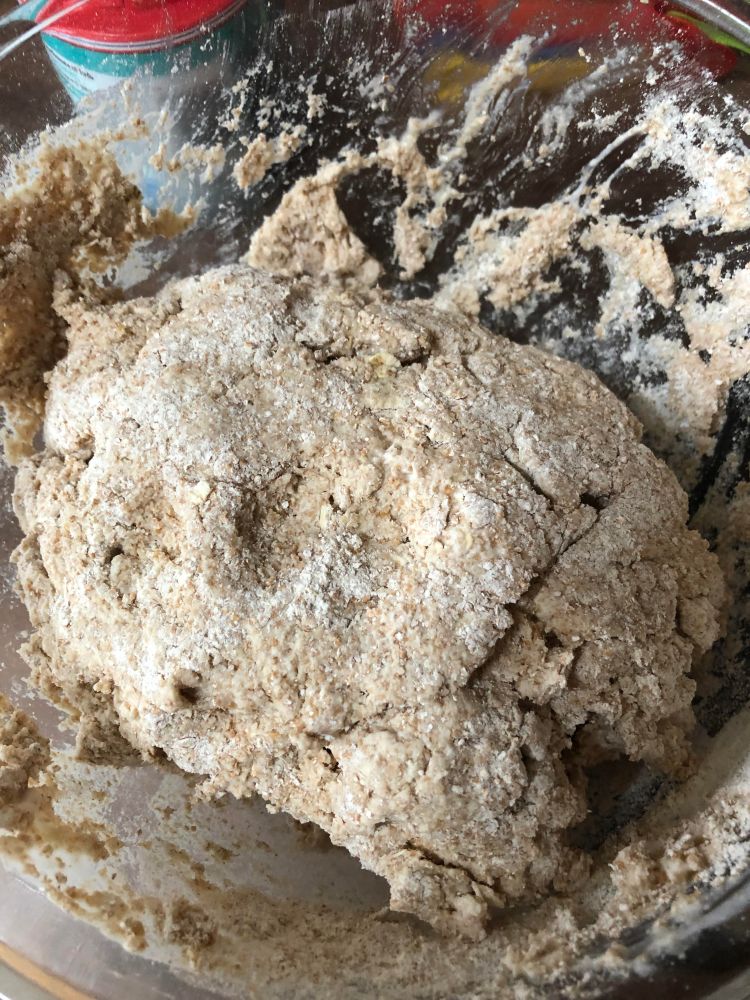
4. Shape into a round and place on a baking tray, either on top of some flour, greaseproof paper or a silicon sheet
5. With a bread knife score the top and slightly spread open. This is to allow the rising to occur.

6. Bake in the preheated for 45 minutes. After 45 minutes, take out of the oven turn over and place back in for another 15 minutes.
7. It should sound hollow when it is cooked.
8. Leave to cool before slicing – or as much as you can. This will help prevent it squashing.

I would love to hear about any of your successes or recipes that you would like to have explained.
Enjoy the sunshine.
Next time – easy peasy biscuits.
 Lockdown Baking