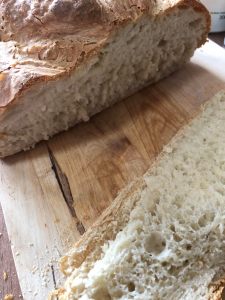
As people decide they are going to bake their own bread for fear of shortages (which are not really there), the shelves are low or completely bare when it comes to bread flour. However, the following recipe from James Morton’s Brilliant Bread works perfectly with normal plain flour; use white though as wholemeal flour is a whole new method.
The structure of bread comes from the protein found in flour – gluten. Gluten is a magical beast and when baking, depending on the recipe, bakers are either encouraging its formation or trying to prevent it; shortcrust pastry is a good example of gluten prevention techniques. Kneading in breadmaking is all about stretching the gluten strands, the more you knead the greater the scaffold you create which traps the air when cooking. However, gluten is also activated when liquid is added to a recipe and so the following recipe works because you are giving the protein time to do its magic with the odd bit of reshaping. The end result is a more open texture than your average shop bought loaf, but it is unbelieavably soft and moreish; so far this loaf has lasted on average half an hour before being completely demolished in this house.
Fast action yeast is used here and this is available everywhere, either in sachets or tins that you can spoon out. Fast action yeast works immediately the liquid is added and begins to ferment. Thats right, it does produce alcohol during the proving process which explains the beerlike aroma. Unfortunately though this alcohol is lost during cooking. Sorry. Yeast is a bacteria and so therefore needs the following to multiply – time, moisture, food and warmth. This recipe gives it plenty of time, the moisture and warmth come from the warm water and the food is supplied by the glucose present in flour. As it ferments carbon dioxide is produced and this is where the magic happens. The activated gluten strands provide a scaffold that traps in the gas bubbles during the proving process. When cooked, they are stablilised in the dough (gelatinisation of the starch within the flour) with the end result being the bread texture we all adore.
Recipe
500g Plain or Strong flour
1 sachet or 7g fast action yeast
7g salt (normal table)
350g tepid water
(James’ recipe asks for 10g salt but I find this too salty)
Stage 1
Dry ingredients – add the flour to a bowl. On one side add the salt and to the other add the yeast. Mix into the flour on each side not letting the salt and yeast touch other as salt kills yeast

Stage 2
Add the warm water to the dry ingredients and mix until it forms a dough. Use the dough to scoop up any dry flour around the bowl.
Stage 3
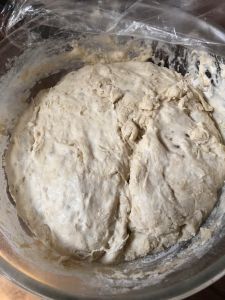
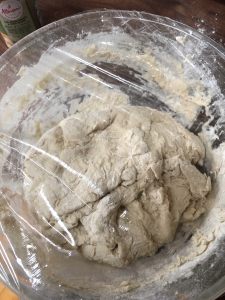
Cover with either a dampt tea-towel or clingfilm and leave to prove for 40 minutes in a warm place.
Stage 4
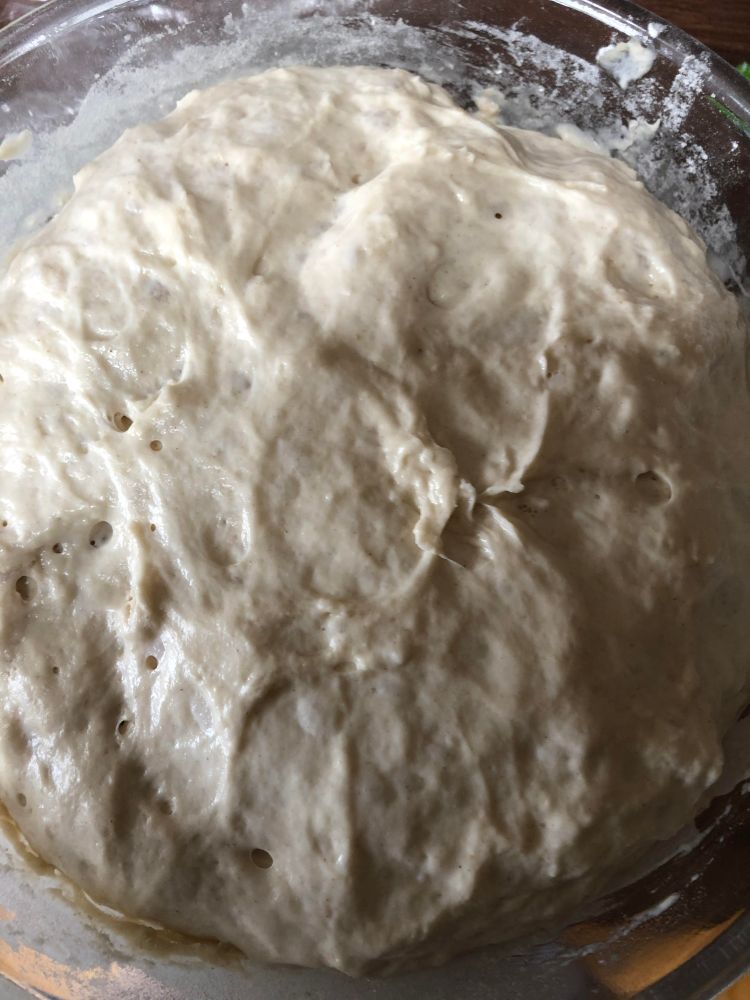
With a wet hand scoop down the side of the bowl and fold the dough into the middle from one side. Repeat turning the bowl a 1/4 turn each fold. Cover once more and leave to prove for another hour in a warm place
Stage 5
Shape into final desired shape, I chose a round shape. Place dough on a lightly floured surface and with floured hands stretch the dough by taking a side in each hand and gently pulling. Fold the ends into the middle, turn the dough and repeat. It should feel tighter after a couple of goes. Then turn the dough over and with cupped hands, shaped into a round.
This now needs its final prove. Flour a baking tray and place the dough onto the tray. I place the tray inside a large carrier bag so that there is plenty of space over the dough (otherwise the dough sticks to the bag). Leave for another hour and preheat the oven during this time to 210 C. By the end of the hour the dough should have doubled in size, this can now be scored with a sharp knife before placing in the oven to bake for 40 minutes.
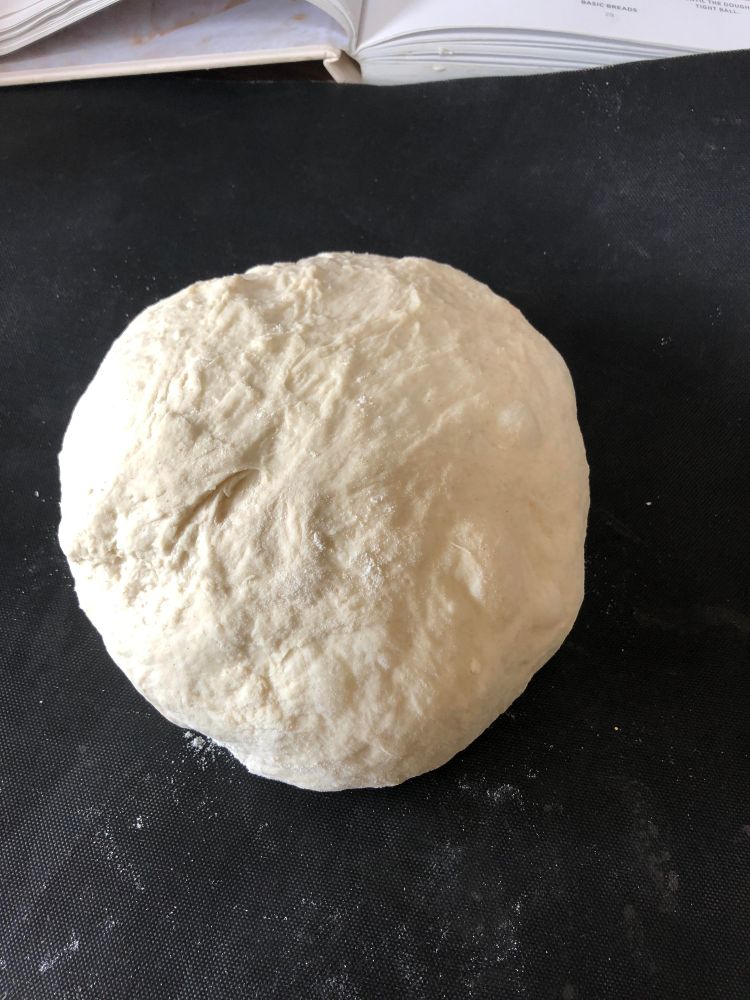
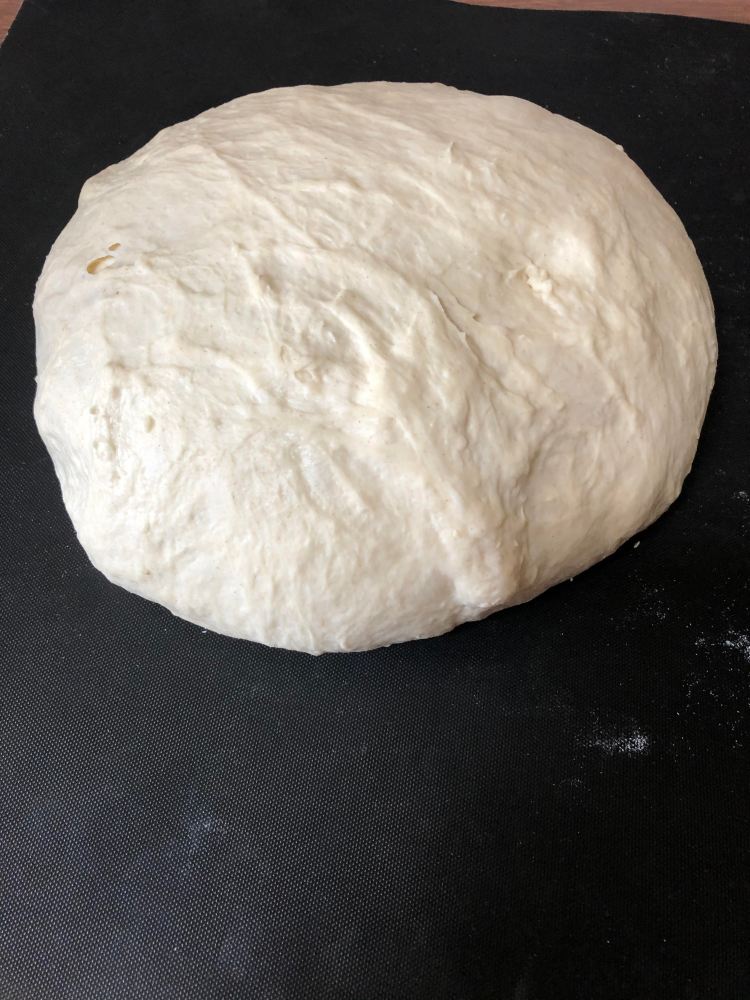
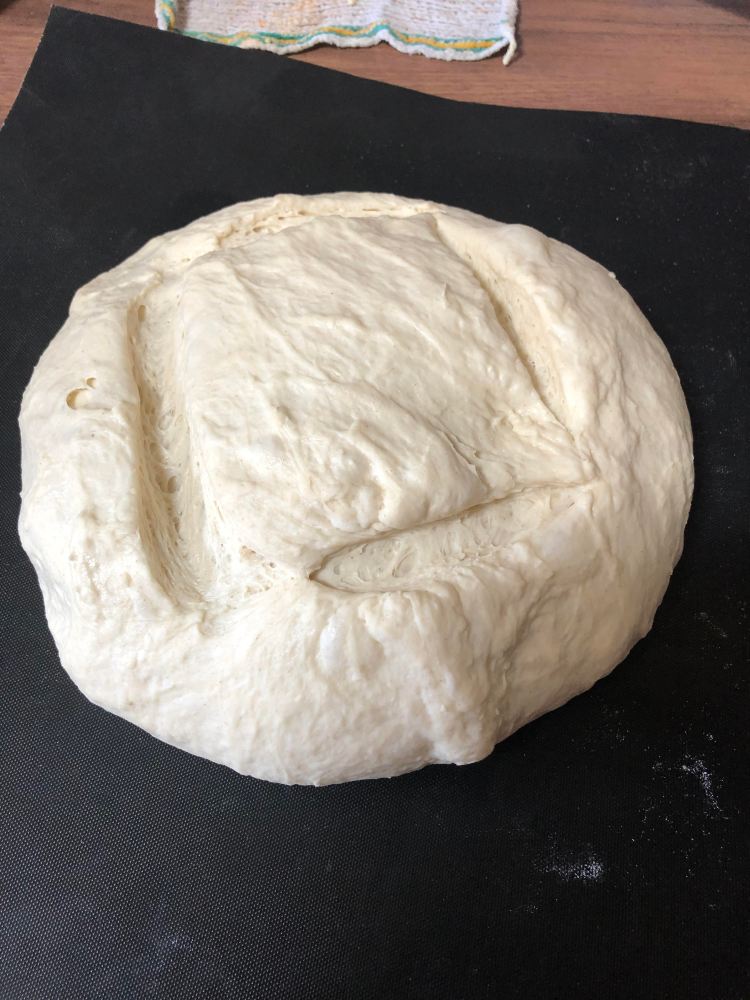
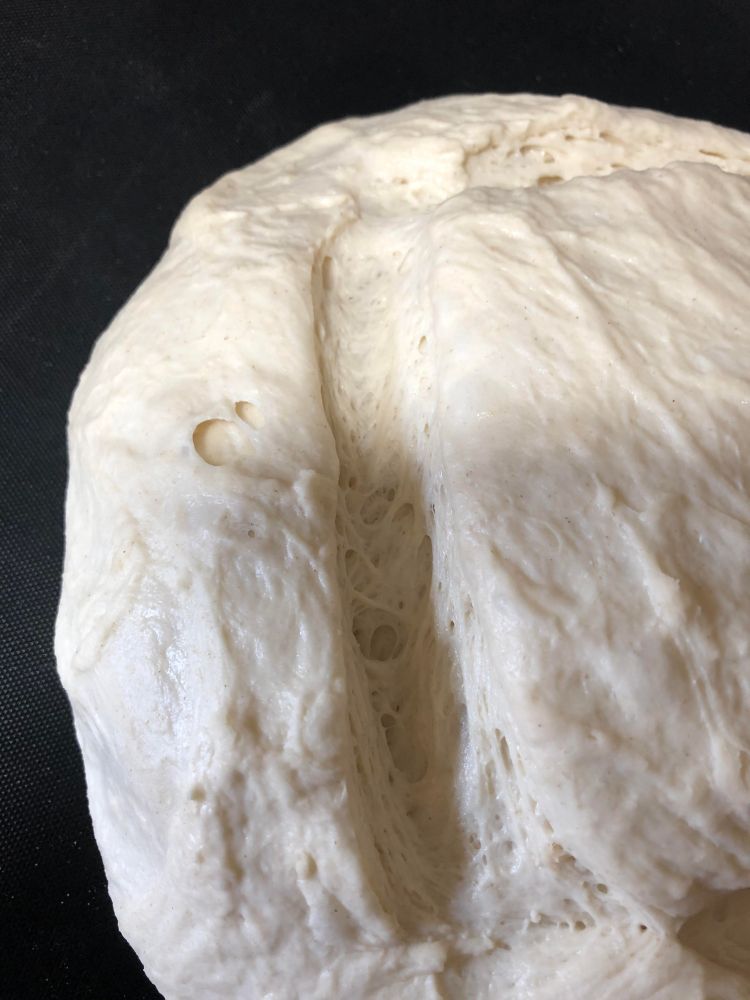
Once out of the oven, leave to cool as much as you can for the best texture when sliced. This stage is tricky in my house as my kids can be fast asleep in bed but still know that the bread has just come out of the oven.
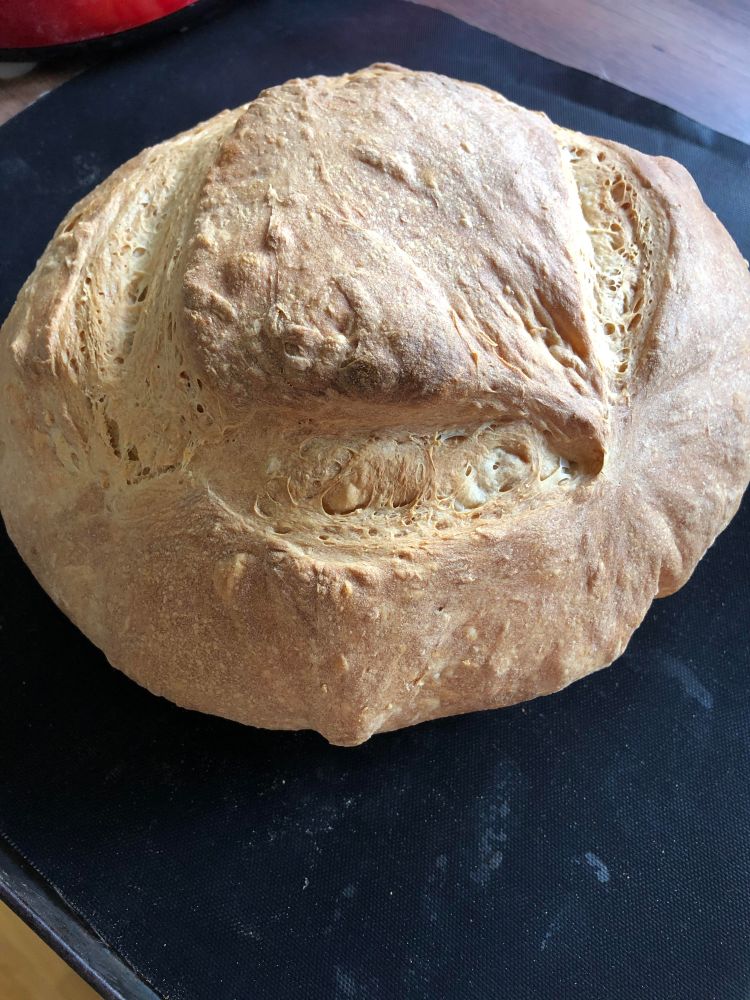
If you love the baking of this bread then please say so. I will be giving my feedback on a lot of James Morton’s recipes but also sharing some foolproof recipes for choux pastry etc that I use at school.


 Lockdown Baking